
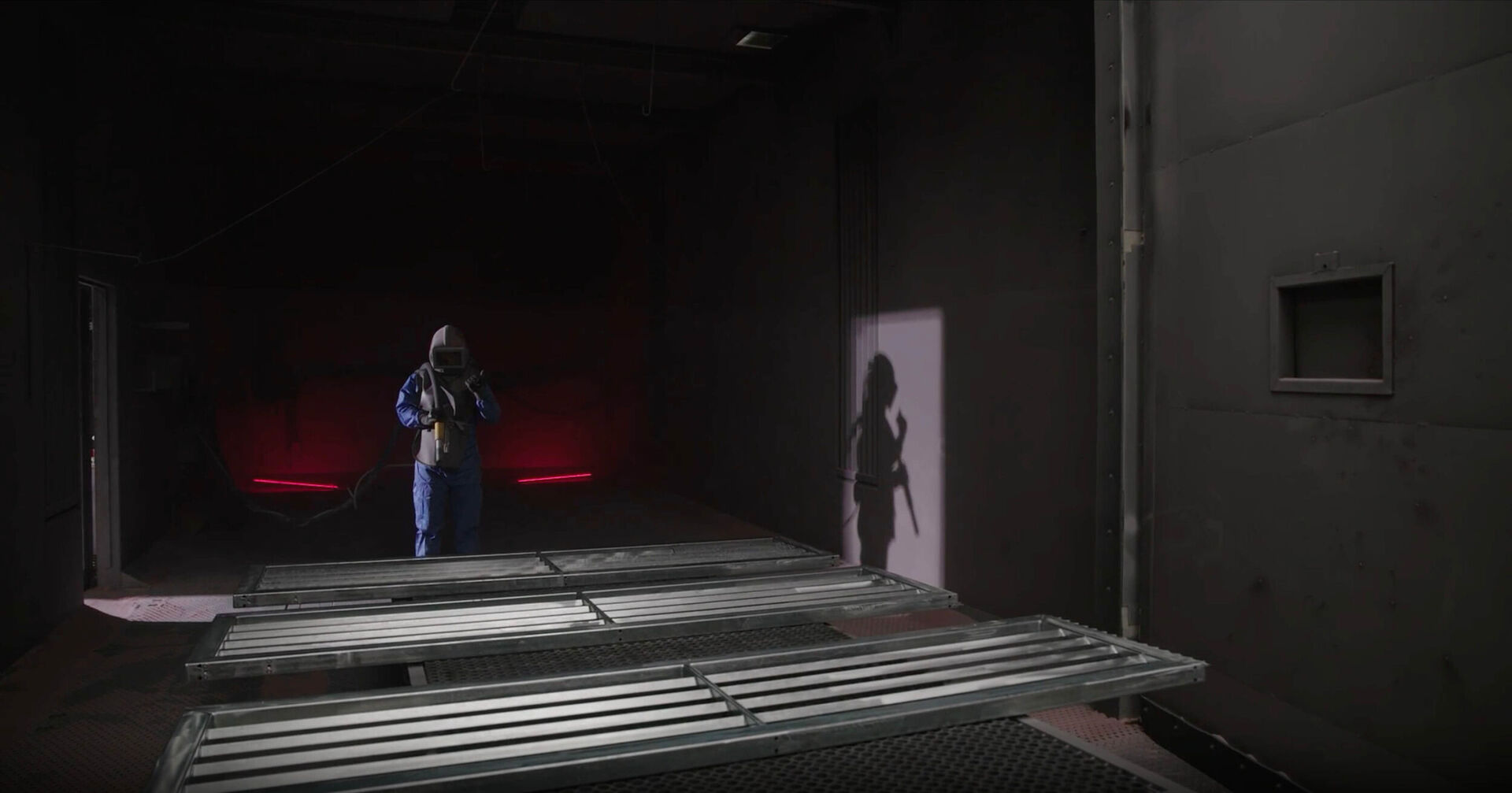
Metallizing, also known as thermal spraying, is a technique in which liquid zinc-aluminum is applied to a rough and clean blasted steel surface to create a strong protective layer. In this process, a zinc/aluminum wire is fed through a spray gun and heated with a flame. The molten metal mixture is then propelled onto the surface using compressed air, applied in one or multiple layers.
The coating thickness varies from 30 to 120 microns, depending on the environmental conditions it will be exposed to. The material solidifies instantly, forming a firmly adhering protective layer.
Unlike galvanizing, this process does not cause steel to deform due to heat, nor does it alter its chemical composition. Metallizing provides the perfect base for powder coating and offers excellent cathodic protection against corrosion. This versatile method combines durability, aesthetics, and technical precision, making it ideal for a wide range of steel applications.
Why choose metallizing over galvanizing (hot-dip galvanizing)?
Metallizing offers several advantages over galvanizing as a protection technique:
- Achieves a very smooth and even coating.
- Prevents any risk of deformation due to heat exposure.
- Creates the perfect surface for powder coating adhesion.
- Does not affect the chemical composition of the steel.
- Utilizes cathodic protection.
Where do we make the difference?
Tilkin Powder Coatings sets itself apart through:
Our additional environmental measures: all electric motors meet the IE3 class standard. High-efficiency motors are controlled by frequency regulation to prevent power surges and reduce CO₂ emissions.
- The entire installation is managed by our PLC system (Programmable Logic Controller), ensuring optimized startup and shutdown, reducing energy consumption by 30%.
- Due to our strict environmental standards, we have installed highly efficient filtration units that emit minimal dust.
- Our custom-developed production software ensures that employees are always correctly informed about the required coating thickness and the allocated working times for each order.
- Specific focus points are highlighted with the necessary visual and textual instructions. Each operator is required to check the coating thickness every 400 working minutes.
- General quality checks are conducted daily by our quality manager. Metallizing is one of the most durable treatments for protecting steel against corrosion, provided that best practices are followed from construction to pre-treatment.